
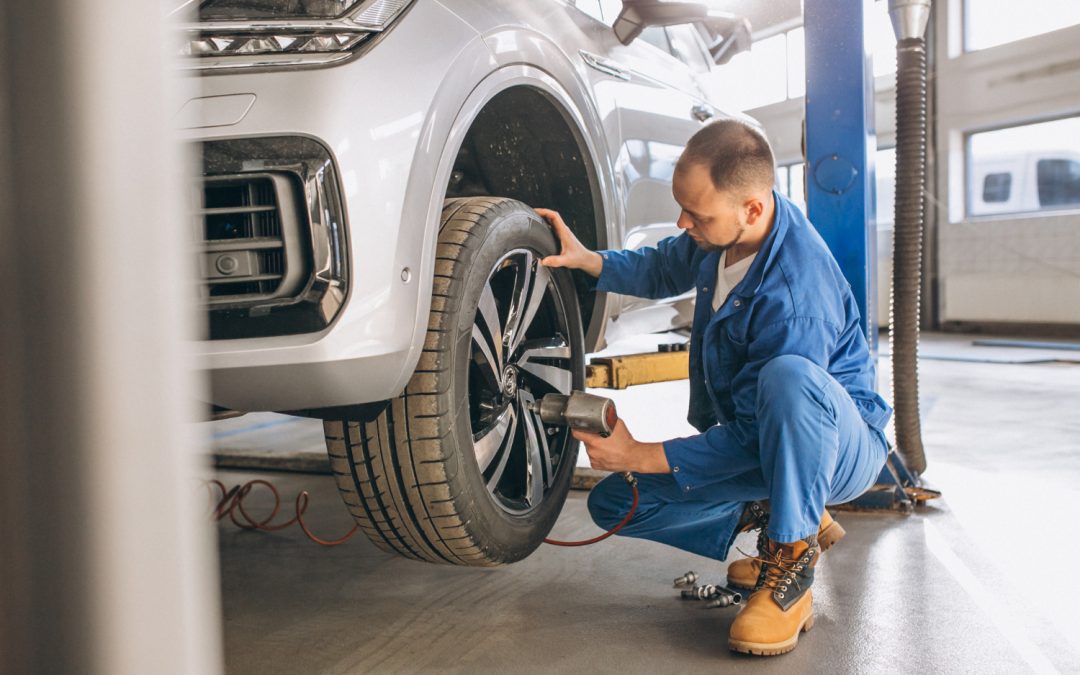
Many drivers assume wheel alignment and tire balancing are the same service, but they address different issues that affect your vehicle’s performance. Understanding the difference can help you recognize warning signs early, improve driving comfort, and extend the life of your tires. If your vehicle isn’t handling as it should, one—or both—of these services may be necessary.
What Is Wheel Alignment?
Wheel alignment involves adjusting the angles of your vehicle’s wheels so they meet the manufacturer’s specifications. Proper alignment ensures all four wheels work together, allowing your vehicle to drive straight and your tires to wear evenly.
You may need a wheel alignment if you notice:
- Your vehicle pulls to one side.
- The steering wheel is off-center.
- Uneven or rapid tire wear.
- Poor handling while driving.
Misalignment can result from hitting potholes, curbs, or simply normal wear over time. Scheduling regular wheel alignment services helps protect your tires and improve overall vehicle performance.
What Is Tire Balancing?
Tire balancing corrects uneven weight distribution around the tire and wheel assembly. Even a small imbalance can cause noticeable vibrations, especially at highway speeds.
Common signs your tires may need balancing include:
- Steering wheel vibration.
- Vehicle shaking at higher speeds.
- Uneven tire wear.
- Reduced ride comfort.
Tire balancing is typically recommended whenever new tires are installed or when tires are rotated to ensure a smooth driving experience.
Do You Need One Service or Both?
Although they solve different problems, wheel alignment and tire balancing often complement each other. A balanced tire can still wear unevenly if the wheels are misaligned, while properly aligned wheels won’t eliminate vibrations caused by an unbalanced tire.
Routine tire maintenance services can help identify whether one or both services are needed based on your vehicle’s condition.
Keep Your Vehicle Driving Smoothly
Ignoring alignment or balancing issues can shorten tire life, reduce fuel efficiency, and affect your vehicle’s handling. Having your suspension, tires, and steering system inspected by experienced technicians allows small issues to be corrected before they become costly repairs.
If you’ve noticed unusual tire wear, vibrations, or steering concerns, schedule a professional vehicle inspection to determine whether wheel alignment, tire balancing, or another repair is needed. Keeping up with preventative maintenance helps ensure a safer, smoother ride every time you get behind the wheel.